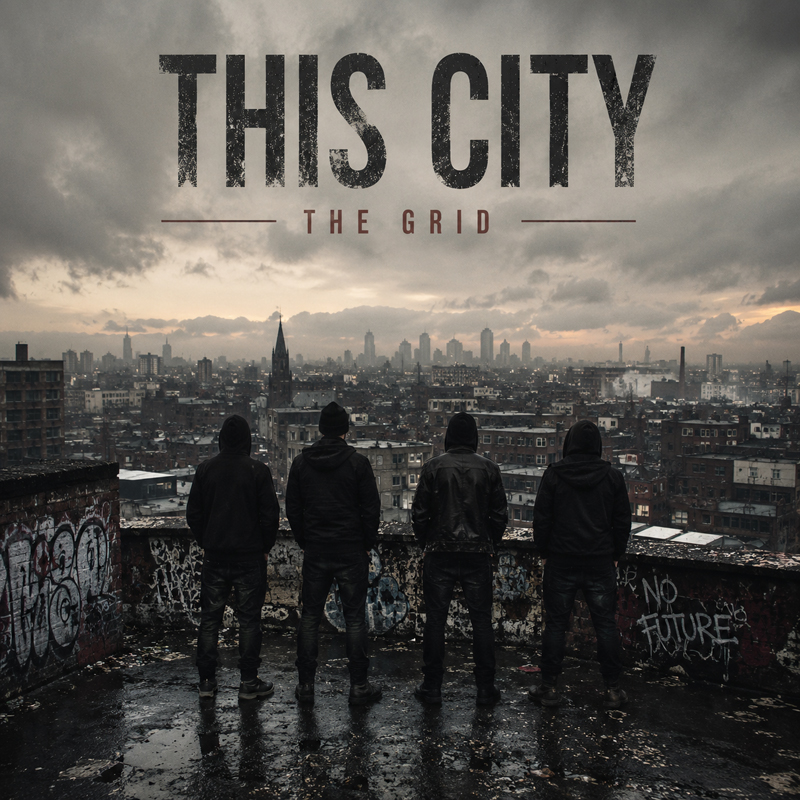
This City
The Grid
Late Night Stereo — Album Review
The Grid — This City
There are albums that arrive loudly, demanding attention from the first note. This City, the debut release from The Grid, does something much rarer. It quietly pulls you into its world until, somewhere around the middle of the record, you realise it has been speaking about loneliness, survival, class, memory and human connection all along.
Built around guitar-driven arrangements that move between intimate acoustic passages and widescreen electric crescendos, This City feels less like a modern streaming-era release and more like a body of work assembled patiently over time.
Opening track “Cassie” immediately establishes the album’s empathy for overlooked lives, tackling domestic abuse with restraint and compassion rather than melodrama. “Counting Days” widens the lens into a reflection on routine, mortality and the fear of wasted years, while “Far Far Away” transforms mental illness and social alienation into something almost anthemic.
The album’s emotional centre may well be “Constellations”, a slow-burning meditation on fleeting human connection. Built around the beautiful line “Tiny stars from tiny moments”, it captures the strange way brief encounters can quietly alter us forever.
Elsewhere, This City becomes more openly political. “Why” uses the innocent questions of a child to expose the absurdities of war, loneliness and inequality, while “The King of Everything” takes aim at modern authoritarianism and manipulation without tying itself to any single figure or ideology.
The title track stands out as the album’s defining statement. “This City” explores class, aspiration and emotional displacement through imagery of walls, distance and exclusion. The repeated refrain, “This city draws me back / This city holds me down”, captures the complicated relationship many people have with modern urban life.
By the time the devastating “No Sign of Life” arrives, the album has fully revealed its central concern: the quiet disappearance of people society no longer notices. Whether addressing homelessness, war, mental illness or economic struggle, these songs consistently return to the same question: how do we remain human in systems that so often strip people of dignity?
Closing track “Better Days”, ends the album perfectly. Its driving chorus and rain-soaked imagery feel timeless, carrying the listener out not with triumph, but with endurance, homeless people simply trying to keep out of the storm and hold onto hope.
What makes This City compelling is not perfection or polish. It’s sincerity. These songs are unafraid to care deeply about ordinary people and the emotional weight they carry. In an era dominated by irony and disposable content, that feels quietly radical.
This City is not an album chasing trends. It’s an album searching for meaning, and more often than not, finding it.